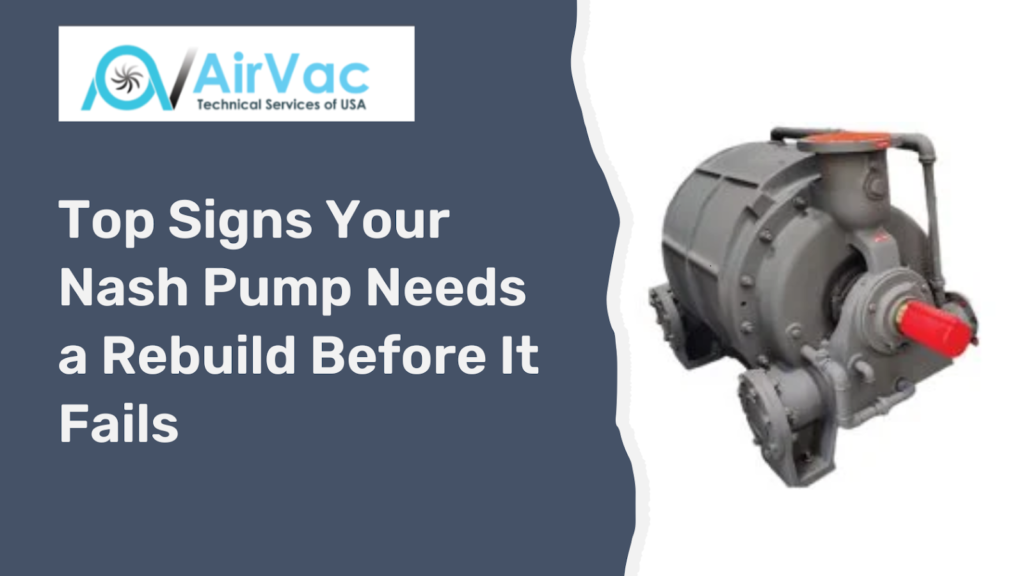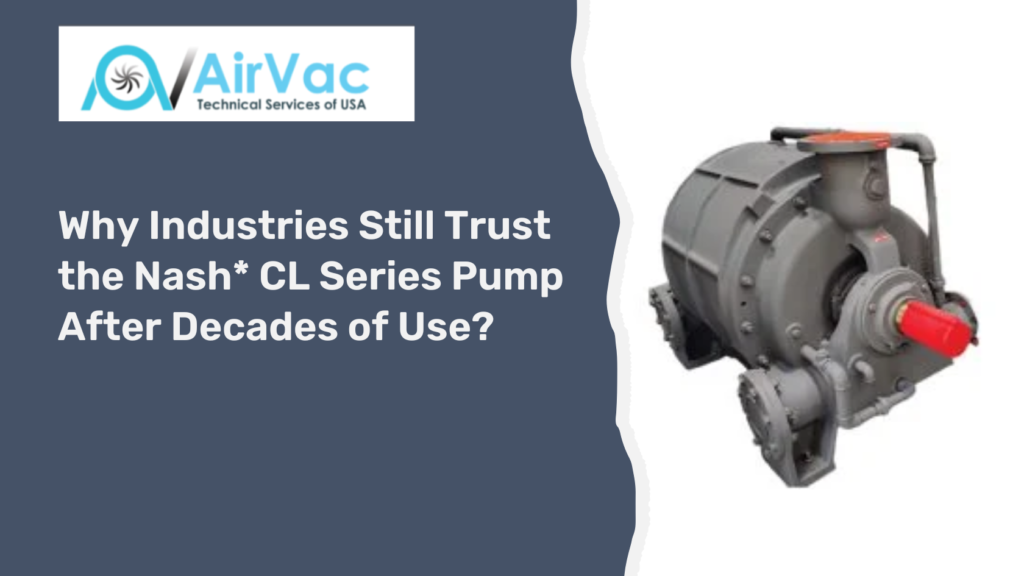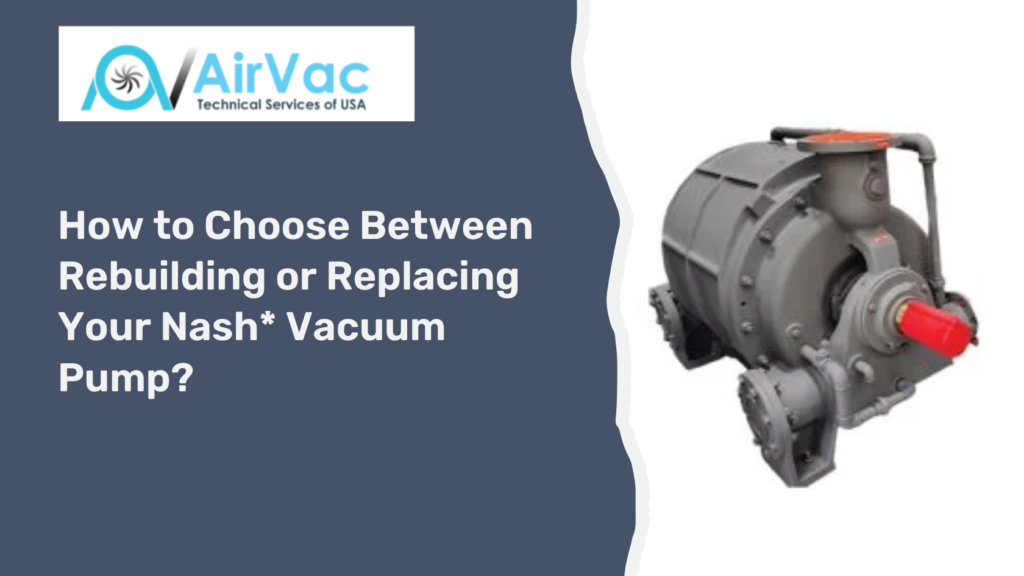
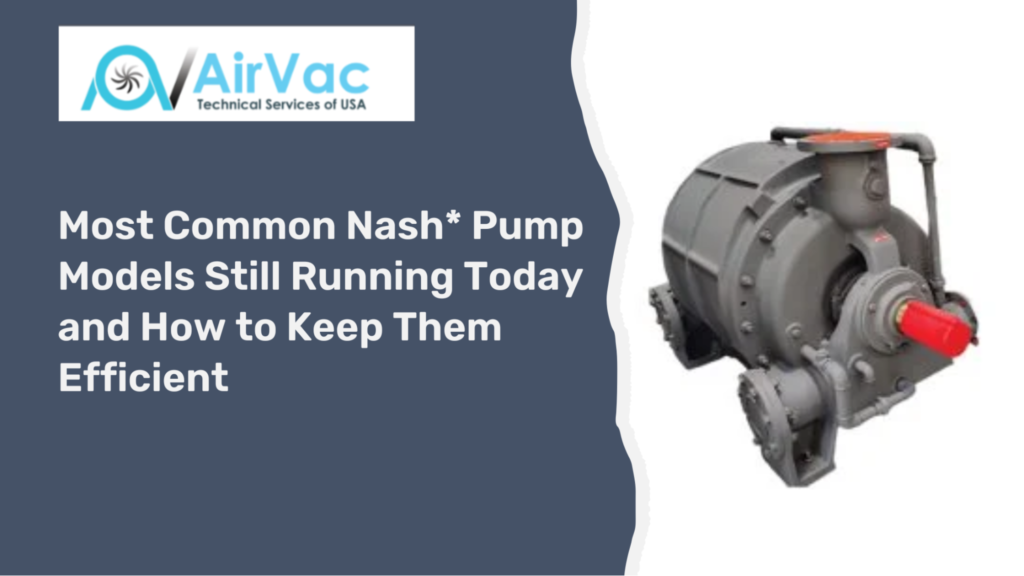
Nash vacuum pumps have earned a reputation t for durability that few pieces of industrial equipment can match. Across North America and in industrial facilities worldwide, Nash pumps are commonly found operating reliably for decades. In paper mills, chemical plants, food processing facilities, power stations, and manufacturing plants, these pumps continue to support critical processes every day.
Many of these installations rely on legacy Nash pump models such as the CL, SC XL, and 904 series. Despite their age, these pumps remain valuable assets becausehey were engineered for demanding environments, extended operating hours, and rebuildability. With proper care and expert service, they can continue delivering consistent vacuum performance far beyond what most modern equipment achieves.
This guide explores the most common Nash pump models still in operation today and explains how to keep them efficient. You will learn why these legacy models remain popular, how long they typically last, and what maintenance practices help preserve performance. The goal is simple to help plant managers, engineers, and maintenance teams get the most value from their existing Nash pumps while minimizing downtime and operating costs.
Why Nash* Pump Models still Running After Decades?
The continued use of older Nash vacuum pumps is not an accident. These machines were designed during an era when industrial equipment was built to last. Their longevity comes from a combination of rugged construction, conservative engineering, and a design that supports rebuilding rather than replacement.
One key factor is the heavy-duty water ring design. Nash pumps use thick cast housings, robust shafts, and generously sized bearings. These components tolerate harsh process conditions,s such as moisture contaminants and fluctuating loads, better than many lightweight modern alternatives.
Another reason is to rebuild friendliness. Nash pumps were engineered so that critical wear components can be replaced or restored. Impellers, cone bearings, seals, and shafts can all be rebuilt or replaced without scrapping the entire unit. This makes long-term ownership far more cost-effective.
Availability of parts and compatible replacements also plays a role. Independent specialists like Airvac Technical Services stock spare parts, rebuilt units, and drop-in replacement models that match original performance specifications. This ensures that even older CL SC XL and 904 series pumps can remain supported long after OEM production has slowed or stopped.
Finally, these pumps earned trust through proven performance. Plants that depend on continuous vacuum often prefer a known, reliable machine over a newer, unproven alternative. When uptime matters, experience counts.
Most Common Nash* Pump Models Still in Operation
Nash* CL Series
The Nash CL series is one of the most widely used legacy vacuum pump families still operating today. These pumps are commonly found in paper mills, chemical plants, power generation facilities, and other heavy industrial environments where reliability is essential.
CL pumps are known for their rugged water ring design and thick casings that resist erosion and wear. Many units have been running for decades, with periodic rebuilds restoring them to near-original performance. Their popularity also stems from their versatility, as they support a wide range of capacities and operating conditions.
Plants continue to rely on CL series pumps because they are predictable, easy to maintain, and well supported by rebuild services and compatible replacement options. With proper seal water control and routine inspections, CL pumps can deliver a stable vacuum for many years.
Nash* SC Series
The Nash SC series is another common sight in industrial facilities. These pumps are typically mid-size units used in general manufacturing, food processing, and chemical applications. They offer a balance between capacity efficiency and physical footprint.
SC pumps are known for reliable performance and relatively good efficiency when properly maintained. Many facilities favor them because they are straightforward to service and respond well to rebuilds. Bearings, seals, and impellers can be restored to extend service life without significant system changes.
Their continued use is driven by familiarity and cost-effectiveness. Maintenance teams know how these pumps operate and how to keep them running efficiently, reducing risk and downtime.
Nash* 904 Series
The Nash 904 series is frequently found in older industrial plants and utility applications. These pumps are especially valued for their smooth operation and consistent vacuum levels. Many were installed decades ago and continue to operate reliably today.
The 904 series features a robust design that tolerates long operating hours and variable conditions. Over time, efficiency can decline due to internal wear, but these pumps are excellent candidates for rebuilds. With proper restoration, they often regain much of their original performance.
Facilities keep 904 pumps in service because they are dependable and familiar. Rebuilding them is often more economical than replacing the entire system, especially when downtime must be minimized.
Nash* XL Series
The Nash XL series comprises larger-capacity pumps designed for demanding applications. These units are commonly used in extensive industrial processes that require high flow rates and continuous duty operation.
Despite their size and workload, XL pumps often remain in service for decades. Their heavy construction and rebuild-friendly design make long-term use practical. Many XL units in operation today have undergone multiple rebuilds yet continue to meet process requirements.
Operators value XL pumps for their robustness and predictable behavior. With proper lubrication, seal water management, and periodic inspection, they can remain efficient even under heavy-duty conditions.
Why These Legacy Nash* Pumps Remain Popular?
One of the main reasons these Nash pump models remain in use is longevity. It is not uncommon for CL SC 904 or XL pumps to operate for twenty to forty years or more when properly maintained. Few modern machines can claim similar service life.
Ease of rebuilding is another significant advantage. Rather than replacing an entire pump plant, a rebuild can restore performance at a fraction of the cost. This approach also reduces waste and simplifies logistics.
Cost effectiveness plays a critical role. Rebuilding or maintaining an existing pump is often significantly less expensive than purchasing a new OEM unit. For facilities with tight maintenance budgets, legacy pumps are an attractive option.
Wide availability of parts and services also supports continued use. Independent specialists maintain inventories of spare parts, rebuilt units, and compatible replacement models, ensuring ongoing support.
Finally, proven performance matters. These pumps have demonstrated reliability in real-world industrial environments. When uptime and consistency are critical, many operators prefer equipment with a long track record.
How to Keep Nash* Pumps Efficient: Model Agnostic Tips?
Maintain Proper Seal Water Quality
Seal water is essential to the performance of water ring vacuum pumps. Maintaining the correct temperature, flow rate, and cleanliness helps prevent overheating, erosion, and efficiency loss. Dirty or warm seal water can reduce vacuum levels and accelerate wear.
Using clean, properly conditioned water and monitoring its temperature ensures stable operation. In some applications, closed-loop seal water systems with heat exchangers provide additional control.
Monitor Vacuum Levels Regularly
Regularly checking vacuum levels is one of the simplest ways to detect early performance issues. A gradual drop in vacuum often indicates internal wear scaling or seal problems.
Tracking vacuum performance over time allows maintenance teams to plan rebuilds before failures occur. Consistent monitoring helps avoid unplanned downtime.
Check Bearings and Shafts for Wear
Bearings and shafts play a critical role in maintaining alignment and smooth operation. Worn bearings increase vibration and mechanical stress, which can reduce efficiency and lead to further damage.
Routine inspection and timely replacement of bearings help preserve performance and extend overall pump life.
Inspect Impellers and Cones
Impellers and cones are central to vacuum generation in Nash pumps. Wear erosion or improper clearances can significantly impact efficiency.
During maintenance or rebuilds, these components should be carefully inspected and restored or replaced as needed. Maintaining proper clearances is essential for optimal performance.
Replace Seals and Packing on Schedule
Seals and packing prevent air leakage and energy loss. Over time, they wear down and lose effectiveness, reducing vacuum efficiency.
Replacing seals and packing on a regular schedule helps maintain consistent vacuum levels and prevents secondary damage.
Keep an Eye on Operating Hours
Tracking operating hours helps predict when maintenance or rebuilds are needed. Many Nash pumps perform reliably for tens of thousands of hours, but efficiency can decline gradually.
Using operating hours as a planning tool supports proactive maintenance rather than reactive repairs.
Model Specific Efficiency Tips
CL Series Efficiency Tips
For CL series pumps, maintaining proper cone clearance is critical. Excessive clearance reduces vacuum efficiency while insufficient clearance increases wear risk.
Monitoring for cavitation wear is also essential, particularly in applications with variable loads. Consistent seal water flow helps minimize this risk and supports stable operation.
SC Series Efficiency Tips
SC series pumps benefit from regular inspection for corrosion, especially in chemical or food processing environments. Keeping seals fresh prevents leakage and maintains efficiency.
During rebuilds, balancing impellers helps reduce vibration and mechanical stress, which improves long-term performance.
904 Series Efficiency Tips
The 904 series is an ideal candidate for rebuild programs. Monitoring for gradual performance drift allows timely intervention before major issues develop.
Where available, upgraded components can improve durability and efficiency while maintaining compatibility with existing systems.
XL Series Efficiency Tips
XL series pumps experience heavy-duty wear due to high-capacity operation. Maintaining lubrication systems and inspecting casings for erosion are especially important.
Regular inspection helps ensure that these large pumps continue delivering a consistent vacuum under demanding conditions.
When Is It Time to Rebuild Your Nash Pump?
Knowing when to rebuild a Nash pump is essential for maintaining efficiency and avoiding downtime. Several warning signs indicate that a rebuild may be needed.
A noticeable drop in vacuum performance is often the first indicator. Increased noise or vibration can signal bearing or alignment issues. Seal leakage suggests worn packing or seals that reduce efficiency. Cooling or temperature issues may indicate seal water problems or internal wear.
Operating hours also provide guidance. Pumps with more than twenty thousand hours of operation often benefit from inspection and rebuild, even if no obvious problems are present.
Planning rebuilds proactively allows facilities to schedule maintenance during planned outages rather than responding to unexpected failures.
Rebuild, Replace, or Upgrade
Choosing between rebuilding, replacing or upgrading a Nash pump depends on operating conditions, budget, and long-term goals.
Rebuilding is often the best option when efficiency has declined, but the core structure remains sound. It restores performance while minimizing cost and downtime.
Replacement may be appropriate for severely worn units or when capacity requirements change significantly. In these cases, a drop-in compatible replacement pump provides a practical solution without major system modifications.
Upgrading to modern replacement models, such as Airvac AV series pumps, can offer improved materials and durability while maintaining compatibility with existing installations.
Evaluating these options with an experienced specialist helps ensure the best outcome for each application.
Expert Rebuild Services for Legacy Nash* Pumps
Airvac Technical Services specializes in rebuilding and supporting legacy Nash vacuum pumps. With over two decades of focused experience, the team understands the unique requirements of CL SC 904 and XL series pumps.
Each rebuild follows a detailed process that includes complete disassembly,y inspection, machining, replacement of wear components, and reassembly. Finished pumps are tested to original performance standards to ensure reliable operation.
Swap-out programs are available to minimize downtime by providing a rebuilt unit first, while the original pump is returned for rebuilding. This approach supports continuous operations in critical facilities.
A large inventory of rebuilt pumps and spare parts allows fast turnaround and dependable support for industrial and medical applications. This expertise helps extend the life of valuable equipment while controlling costs.
Frequently Asked Questions
What are the most common Nash* pump models still used today?
The most common models still in operation include the CL SC, XL, and 904 series. These pumps are widely used across industrial sectors due to their durability and rebuildability.
How long do Nash* vacuum pumps last
With proper maintenance and periodic rebuilds, Nash pumps often last 20 to 40 years or more. Many facilities operate the same units for decades.
How do I keep my Nash* pump efficient?
Maintaining seal water quality monitoring, vacuum levels, inspecting wear components, and scheduling rebuilds are key practices for preserving efficiency.
Why are older Nash* pump models still popular?
Their popularity stems from proven reliability, ease of rebuilding, cost-effectiveness, and continued availability of parts and service support.
What maintenance does a Nash* CL SC or 904 pump need
Each model requires regular inspection of bearings, seals, impellers, and seal water systems. Model-specific attention to clearances, corrosion, and wear helps maintain performance.
Are rebuilt Nash* pumps reliable?
When rebuilt by experienced specialists and tested to original standards, rebuilt pumps deliver reliable performance comparable to new units.
Conclusion
Legacy Nash vacuum pumps, such as the CL SC 904 and XL series, remain reliable workhorses in industrial facilities worldwide. Their continued performance depends on consistent maintenance, timely rebuilds, and expert support.
By understanding the strengths of each model and applying proven maintenance practices,s facilities can extend pump life, maintain efficiency, and control operating costs.If you need help maintaining, rebuilding, or replacing a legacy Nash pump, Airvac Technical Services is ready to support you. Contact Airvac today to keep your vacuum systems running efficiently and reliably for years to come.