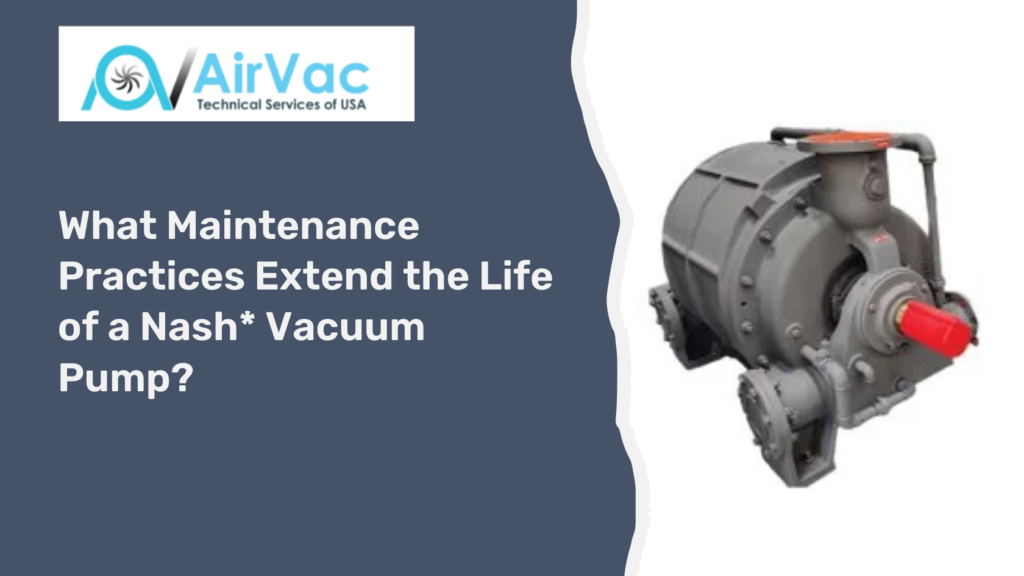
A Nash vacuum pump lasts longer when it receives regular, correct maintenance. Simple actions like daily inspections, clean seal water, proper lubrication, and timely repairs can extend pump life by many years. When maintenance is ignored, even a well-built Nash pump can lose vacuum performance, consume more energy, and fail earlier than expected. Good maintenance protects uptime, lowers operating costs, and keeps industrial processes stable.
Nash vacuum pumps are widely used in paper mills, chemical plants, food processing facilities, power stations, and medical systems. These pumps often operate continuously and support critical production steps. As a result, minor maintenance issues can quickly escalate into major problems if left unaddressed. Common causes of early failure include poor water quality, worn bearings, seal damage, scale buildup, and lack of routine inspections.
This guide explains the most effective maintenance practices that help extend the service life of a Nash vacuum pump. It covers daily, weekly, and monthly checks that reduce wear and prevent sudden breakdowns. It also explains how seal water quality affects internal components, why vibration and temperature monitoring matter, and how planned rebuilds support long-term reliability. In addition, the guide outlines common maintenance mistakes and shows how preventive care improves safety and efficiency.
Why Proper Maintenance Matters for Nash* Vacuum Pumps?
Nash vacuum pumps support critical processes. They remove air, vapor, and gases from systems that must stay stable. When the vacuum drops, production suffers.
Maintenance affects more than reliability.
Benefits of Good Maintenance
• Longer pump life
• Stable vacuum performance
• Lower energy use
• Fewer emergency repairs
• Safer operation
• Lower total cost of ownership
According to data published by the U.S. Department of Energy, poorly maintained rotating equipment can lose up to 10 percent efficiency over time. In vacuum systems, this loss often shows up as reduced capacity and higher operating costs.
Understanding How a Nash* Vacuum Pump Works
Before discussing maintenance, it helps to understand basic operation.
A Nash vacuum pump is a liquid ring pump. It uses a rotating impeller inside a casing filled with seal liquid, usually water. As the impeller spins, the liquid forms a ring. This ring creates chambers that trap and compress gas.
Because liquid ring pumps rely on clearances, balance, and seal liquid quality, maintenance directly affects performance.
Daily Maintenance Practices That Prevent Early Wear
Daily checks take little time but prevent major failures.
Check Seal Liquid Flow
Seal liquid controls the vacuum level and cooling.
Verify that:
• Flow rate meets design requirements
• Inlet valves are open
• No blockages exist
Low seal liquid flow can cause overheating and seal damage.
Monitor Operating Temperature
High temperature is an early warning sign.
Check:
• Discharge temperature
• Bearing housing temperature
• Seal liquid temperature
Rising temperatures often indicate scaling, low flow, or internal wear.
Listen for Unusual Noise or Vibration
A healthy Nash pump runs smoothly.
Warning signs include:
• Grinding sounds
• Sudden vibration
• Rattling during startup
Noise often points to bearing wear or imbalance.
Weekly Maintenance Tasks That Improve Reliability
Weekly inspections add another layer of protection.
Inspect Bearings and Lubrication
Bearings support the shaft and impeller.
Tasks include:
• Check oil level
• Inspect grease condition
• Look for leaks
Lubrication failure is one of the most common causes of pump damage.
Check Vacuum Levels Against Baseline
Track performance trends.
Compare cthe urrent vacuum to:
• Original startup readings
• Normal operating range
A slow drop in vacuum often signals internal wear or scaling.
Monthly Maintenance That Extends Pump Life
Monthly tasks help catch problems early.
Inspect Mechanical Seals
Mechanical seals prevent leaks.
Look for:
• Drips or visible leakage
• Seal face wear
• Excessive heat
Seal failure can lead to shaft damage if ignored.
Clean Strainers and Filters
Debris reduces flow and cooling.
Clean:
• Seal liquid strainers
• Cooling water filters
Blocked strainers reduce efficiency and increase wear.
The Role of Seal Liquid Quality in Pump Longevity
Seal liquid quality directly impacts pump life.
Why Water Quality Matters
Poor water causes:
• Scaling
• Corrosion
• Erosion
• Reduced vacuum
According to the U.S. Environmental Protection Agency, mineral-rich water accelerates scaling in industrial equipment and reduces heat transfer efficiency.
Best Practices for Seal Liquid Control
• Use clean water
• Control hardness
• Maintain proper pH
• Avoid solids
In harsh environments, closed-loop systems using treated water significantly extend pump life.
Scaling Control and Its Impact on Nash* Vacuum Pumps
Scaling narrows internal clearances.
Effects include:
• Reduced capacity
• Increased power draw
• Higher temperatures
Preventing Scale Buildup
• Use water treatment
• Flush casing regularly
• Monitor temperature rise
Ignoring scale leads to permanent casing damage.
Proper Startup and Shutdown Procedures
Many pumps fail due to poor operating practices.
Startup Best Practices
• Ensure seal liquid flow before startup
• Confirm correct rotation
• Avoid dry starts
Dry starts cause immediate seal damage.
Shutdown Best Practices
• Flush pump if needed
• Allow controlled cooldown
• Isolate water lines properly
Controlled shutdown prevents thermal stress.
Vibration Monitoring and Predictive Maintenance
Modern plants rely on data.
Why Vibration Monitoring Works
Vibration changes the signal:
• Bearing wear
• Shaft imbalance
• Impeller damage
Predictive maintenance catches problems before failure.
Typical Vibration Limits
| Component | Normal Range |
| Bearings | Low steady vibration |
| Shaft | Minimal axial movement |
| Impeller | Balanced rotation |
Trending vibration data improves planning accuracy.
Alignment and Foundation Maintenance
Misalignment shortens pump life.
Effects of Poor Alignment
• Bearing overload
• Seal wear
• Shaft stress
Check alignment after:
• Motor replacement
• Base repairs
• Pipe modifications
Proper Lubrication Practices
Lubrication errors cause failures.
Common Lubrication Mistakes
• Over-greasing
• Wrong oil type
• Skipped intervals
Always follow manufacturer’s lubrication schedules.
Monitoring Power Consumption
Power draw tells a story.
Rising amperage often means:
• Internal wear
• Scaling
• Reduced efficiency
Tracking power helps detect issues early.
Maintenance Intervals That Extend Service Life
Consistency matters more than frequency.
Recommended Maintenance Schedule
| Task | Interval |
| Visual checks | Daily |
| Lubrication | Weekly |
| Seal inspection | Monthly |
| Vibration analysis | Quarterly |
| Full inspection | Annually |
Planned care reduces emergency failures.
When to Schedule a Rebuild
Even with good care, wear occurs.
Signs a Rebuild Is Needed
• Persistent vacuum loss
• Rising vibration levels
• Seal failures
• Bearing noise
Rebuilding restores original clearances and performance.
How Rebuilds Extend Pump Life?
A proper rebuild includes:
• Complete disassembly
• Machining of wear surfaces
• New bearings and seals
• Balance testing
Rebuilt pumps often perform like new units.
Using Swap Out Programs as a Maintenance Strategy
Swap out programs support long term maintenance.
Benefits include:
• Reduced downtime
• Predictable costs
• Faster recovery
This approach fits well with preventive maintenance planning.
Environmental Benefits of Proper Maintenance
Maintained pumps consume less energy.
According to the U.S. Department of Energy, efficient industrial equipment reduces energy waste and operating costs.
Longer pump life also reduces waste and material use.
Safety Benefits of Preventive Maintenance
Well-maintained pumps reduce risk.
Benefits include:
• Fewer leaks
• Lower surface temperatures
• Reduced emergency repairs
Safe equipment protects workers and facilities.
Common Maintenance Mistakes to Avoid
Ignoring early warning signs: Small issues often precede major failures. Rising vibration, unusual noise, higher temperature, or a slow drop in vacuum are all warning signs. When these signs are ignored, internal wear increases and damage spreads to bearings, seals, and shafts. Addressing problems early reduces repair costs and prevents sudden shutdowns.
Using untreated water: The seal water quality has a direct effect on pump life. Untreated water often contains minerals and solids that cause scaling, corrosion, and erosion inside the casing. Over time, scale reduces clearances and lowers vacuum performance. Using clean, treated water or a controlled closed-loop system helps protect internal surfaces and maintain efficiency.
Skipping lubrication: Lubrication protects bearings and moving parts. Skipping lubrication or using the wrong oil or grease increases friction and heat. This leads to bearing failure, shaft damage, and unplanned downtime. Following proper lubrication intervals and using the correct lubricant extends component life and keeps the pump running smoothly.
Running pumps outside design limits: Operating a Nash vacuum pump beyond its specified vacuum level, flow rate, or temperature range can cause excessive stress. This accelerates wear and reduces reliability. Pumps should always operate within specified limits to maintain stable performance and long service life.
Avoiding these common mistakes helps extend service life, reduce repair costs, and support reliable vacuum operation.
FAQ Based on Google People Also Ask
How long does a Nash* vacuum pump last?
With proper maintenance, many Nash pumps operate for 20 years or more.
What causes Nash* vacuum pumps to fail?
Common causes include poor water quality, bearing failure, seal damage, and lack of lubrication.
How often should a Nash* vacuum pump be serviced?
Basic checks should occur daily, with deeper inspections monthly and annually.
Can maintenance reduce energy use?
Yes. Clean, well aligned pumps operate more efficiently and draw less power.
Is rebuilding better than replacing a Nash* pump?
In many cases, rebuilding restores performance at a lower cost than replacement.
Long-Term Maintenance Planning for Nash* Pumps
Successful plants plan ahead.
Key steps include:
• Keeping maintenance records
• Tracking trends
• Scheduling rebuilds early
• Training staff
This approach prevents surprise failures.
Final Thoughts on Extending Nash* Vacuum Pump Life
Airvac Technical Services supports maintenance practices that extend the life of Nash vacuum pumps through discipline and consistency. Daily checks, water quality control, proper lubrication, and early repairs all play a role. Plants that invest in maintenance gain longer equipment life, better performance, and lower operating costs. These practices protect uptime and support safe, efficient operations for years.