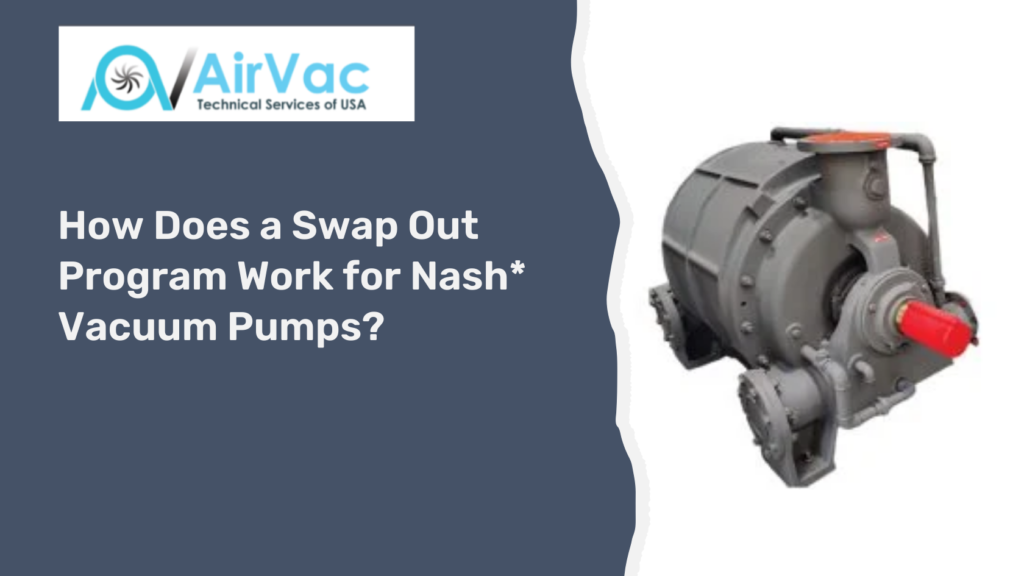
Industrial vacuum systems must run every day. When a Nash vacuum pump fails, production can come to a halt. Downtime costs money, labor, and lost output. A swap-out program helps plants avoid long shutdowns by quickly replacing the pump while repairs are underway off-site.
This article explains how a swap-out program works for Nash vacuum pumps. It covers the full process step by step. It explains who benefits most, how much time and cost it saves, and how it compares to traditional repairs. This guide is written for maintenance managers, engineers, and procurement teams who need reliable vacuum performance with minimal disruption.
What Is a Swap Out Program for Nash* Vacuum Pumps?
A swap-out program is a service model based on replacement. Instead of waiting weeks for your pump to be rebuilt, you receive a rebuilt pump first. You install it. Then you return your used pump later.
This process keeps your vacuum system running with little downtime.
Simple Definition
A swap-out program means:
• You receive a rebuilt Nash vacuum pump
• The pump is ready to install
• Your old pump is returned after the changeout
• Rebuilding happens off-site
The goal is uptime. The process removes long rebuild delays from your production schedule.
Why Nash* Vacuum Pumps Are Ideal for Swap Out Programs?
Nash liquid ring vacuum pumps use proven designs. Many models stay in service for decades. Their durability makes them ideal for rebuilding and reuse.
Common Nash Models Used in Swap Out Programs
• CL series
• SC series
• XL series
• 904 series
These pumps share consistent housings, tolerances, and performance ranges. This allows rebuilders to stock rebuilt units that fit without modification.
Why Downtime Is So Costly in Industrial Vacuum Systems?
Downtime affects more than one machine. Vacuum pumps often support entire processes.
Industries That Depend on Continuous Vacuum
• Paper and pulp
• Food processing
• Chemical production
• Power generation
• Medical vacuum systems
• Plastics and molding
According to U.S. Department of Energy studies, unplanned downtime can cost industrial plants thousands of dollars per hour. In process industries, losses can exceed tens of thousands per hour when utilities fail.
A swap-out program removes rebuild time from the critical path.
Traditional Nash* Pump Rebuild vs Swap Out Program
Understanding the difference helps explain the value.
Traditional Rebuild Process
- Pump fails or performance drops
- The pump is removed from service
- Pump is shipped for rebuild
- Rebuild takes several weeks
- Pump returns and is reinstalled
This method often causes long outages or forces plants to rent backup units.
Swap Out Program Process
- Rebuilt pump ships first
- Pump arrives ready to install
- Old pump is removed
- Rebuilt pump goes into service
- Old pump is returned later
Production downtime is limited to the changeout window only.
Step-by-Step How a Swap Out Program Works
Step 1: Pump Identification
The process starts by confirming your pump model.
Key details include:
• Nash model number
• Seal type
• Motor frame size
• Rotation direction
• Mounting orientation
• Materials of construction
Correct matching ensures drop in fit and performance.
Step 2: Rebuilt Pump Allocation
Once the model is confirmed, a rebuilt pump is assigned.
This pump has already gone through:
• Complete disassembly
• Inspection of all components
• Replacement of worn parts
• Machining to restore tolerances
• Dynamic balancing
• Seal and bearing replacement
The pump is built to match original operating specifications.
Step 3: Testing and Quality Checks
Before shipping, rebuilt pumps undergo performance testing.
Typical tests include:
• Vacuum level verification
• Flow rate confirmation
• Leak testing
• Vibration analysis
• Mechanical run-in testing
This ensures the pump performs like a new unit.
Step 4: Shipment to Your Facility
The rebuilt pump ships to your site.
Most swap-out programs ship pumps:
• Fully assembled
• Properly protected
• Ready for immediate installation
Some suppliers also provide lifting instructions and installation guidance.
Step 5: Pump Changeout at Your Site
Your maintenance team removes the existing pump and installs the rebuilt unit.
Because the pump matches the original:
• No piping changes are needed
• No base modifications are required
• Motor alignment remains standard
Downtime is usually limited to hours instead of weeks.
Step 6: Return of Your Old Pump
After the system is back online, your used pump is returned.
This pump becomes part of the rebuild inventory cycle. If the casing is usable, it will be rebuilt for future customers.
What Parts Are Replaced During a Swap-Out Rebuild?
Rebuilt pumps are not cosmetic repairs. They are full mechanical restorations.
Common Components Replaced
• Bearings
• Mechanical seals
• Shaft sleeves
• Wear plates
• Gaskets and O rings
• Fasteners
Critical clearances are restored to factory standards.
Performance Expectations After a Swap Out
A properly rebuilt Nash vacuum pump delivers performance comparable to a new unit.
Expected Results
• Stable vacuum levels
• Improved efficiency
• Reduced vibration
• Lower operating noise
• Reliable startup
In many cases, plants see improved performance compared to their worn original pump.
Cost Benefits of a Swap Out Program
Cost control is a major driver for swap-out programs.
Typical Cost Savings
Industry data shows rebuilt industrial pumps often cost 30 to 50 percent less than new OEM equipment. This includes avoided downtime costs.
Savings come from:
• Lower capital cost
• No rental equipment
• Reduced labor hours
• Faster return to service
These savings help maintenance budgets stretch further.
How Swap Out Programs Support Preventive Maintenance
Swap out programs that align well with planned maintenance schedules.
Instead of waiting for failure, plants can:
• Schedule changeouts during shutdowns
• Avoid emergency repairs
• Rotate pumps on predictable intervals
This supports reliability-centered maintenance strategies used in modern plants.
Environmental Benefits of Swap Out Programs
Rebuilding equipment reduces environmental impact.
According to U.S. Environmental Protection Agency guidance on industrial sustainability, equipment reuse reduces:
• Raw material consumption
• Energy use in manufacturing
• Industrial waste
Rebuilt pumps extend the service life of existing assets while maintaining performance.
Safety Advantages of Using a Swap Out Program
Emergency repairs increase risk. Swap out programs reduce that risk.
Benefits include:
• Fewer rushed repairs
• Less hot work
• Reduced lifting hazards
• Controlled installation conditions
Safer maintenance practices protect both equipment and people.
Common Applications That Use Nash* Swap Out Programs
Paper and Pulp Mills
Used for dewatering and vacuum forming. Continuous operation makes downtime costly.
Food and Beverage Plants
Used for packaging and conveying. Hygiene and uptime are critical.
Power Plants
Used for condenser vacuum and utility services.
Chemical Processing
Used for filtration, distillation, and vapor handling.
Medical Facilities
Used for central vacuum systems that must remain operational.
How to Prepare for a Swap Out Program?
Preparation ensures a smooth changeout.
Best Practices
• Confirm motor compatibility
• Check electrical connections
• Inspect base and piping
• Plan lifting equipment
• Schedule trained staff
Preparation shortens installation time and prevents delays.
Swap Out Program vs Buying a New Pump
New Pump Purchase
• Higher cost
• Longer lead times
• Often requires engineering review
Swap Out Program
• Lower cost
• Faster delivery
• Proven compatibility
For aging Nash equipment, swap-out programs offer faster results without sacrificing reliability.
Common Concerns About Swap Out Programs
Is a rebuilt pump reliable?
Yes. When rebuilt correctly, performance matches original specifications.
Will the pump fit exactly?
Yes. Swap-out units are built for drop-in compatibility.
What if my pump is damaged?
Most casings can be rebuilt. Severe damage may affect credit value but does not delay installation.
Key Metrics Used to Evaluate Swap Out Success
Maintenance teams track results using:
• Mean time between failures
• Energy consumption
• Vibration readings
• Maintenance labor hours
• Downtime incidents
Consistently swapping out programs improves these metrics.
Comparison of Traditional Rebuild vs Swap Out Program
| Factor | Traditional Rebuild | Swap Out Program |
| Downtime | Weeks | Hours |
| Capital cost | Lower | Lower |
| Lead time | Long | Short |
| Planning | Reactive | Proactive |
| Risk | Higher | Lower |
FAQ Based on Google People Also Ask
What is a vacuum pump swap-out?
It is a program where a rebuilt pump is installed first, and the old pump is returned later for rebuilding.
How long does a Nash* pump swap take?
Most installations take a few hours, depending on site conditions.
Are swap out pumps tested?
Yes. Rebuilt pumps are tested for vacuum level, flow, and mechanical stability.
Is a swap-out cheaper than a new pump?
Yes. Rebuilt pumps typically cost significantly less than new OEM pumps.
Can we swap out programs to support older Nash models?
Yes. Many programs support legacy CL, SC, XL, and 904 models.
When a Swap Out Program Makes the Most Sense?
Swap out programs work best when:
• Downtime is expensive
• Equipment is critical
• Pumps are older than five years
• OEM lead times are long
• Maintenance teams want predictable schedules
These conditions describe most industrial vacuum systems.
Final Thoughts on Swap Out Programs for Nash* Vacuum Pumps
Airvac Technical Services offers swap-out programs that remove downtime risk from pump rebuilding. This approach allows plants to keep running while maintenance happens in the background. The process is simple, proven, and cost-effective. For facilities that rely on Nash vacuum pumps every day, swap out programs support uptime, safety, and budget control without sacrificing performance.