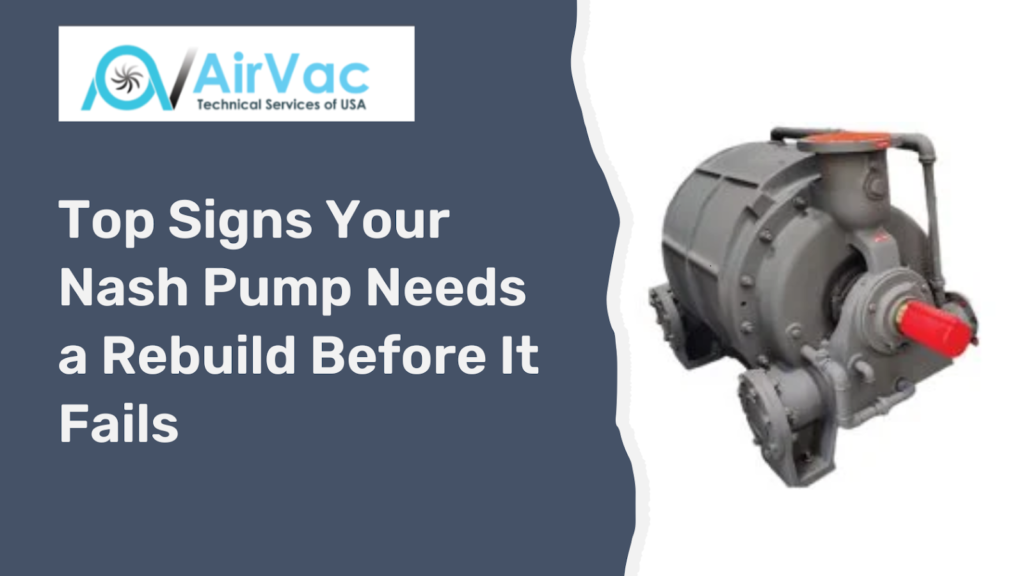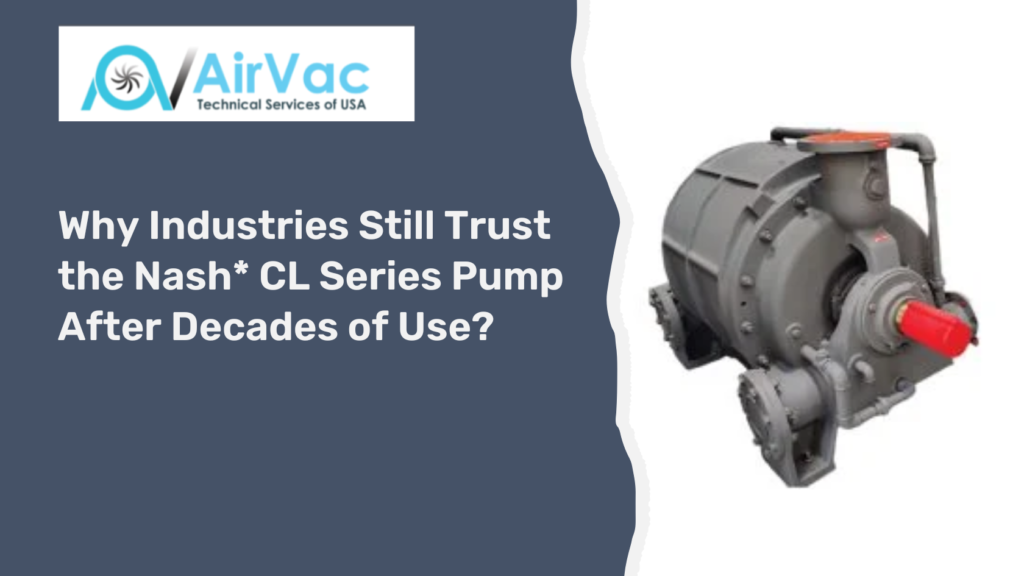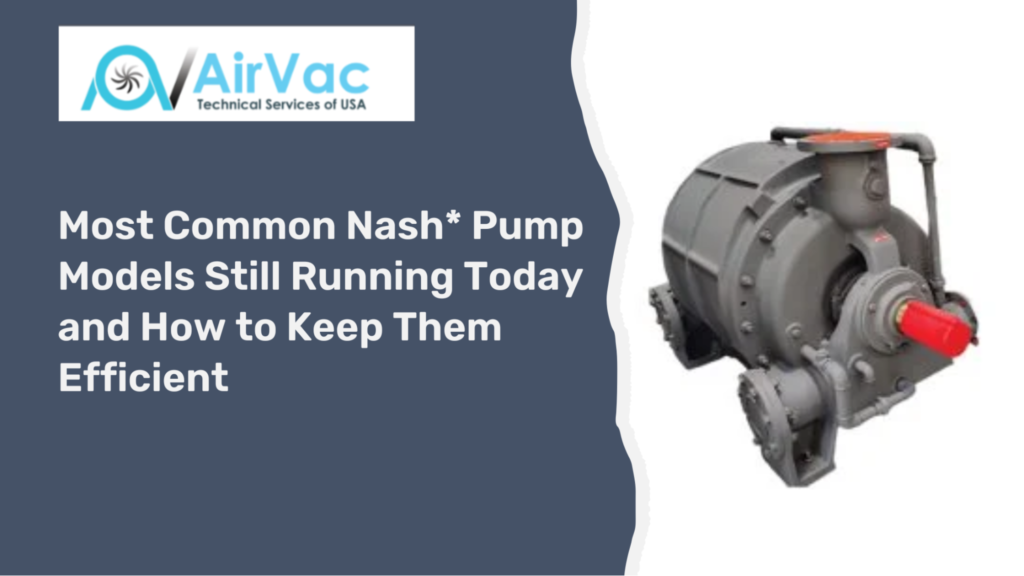
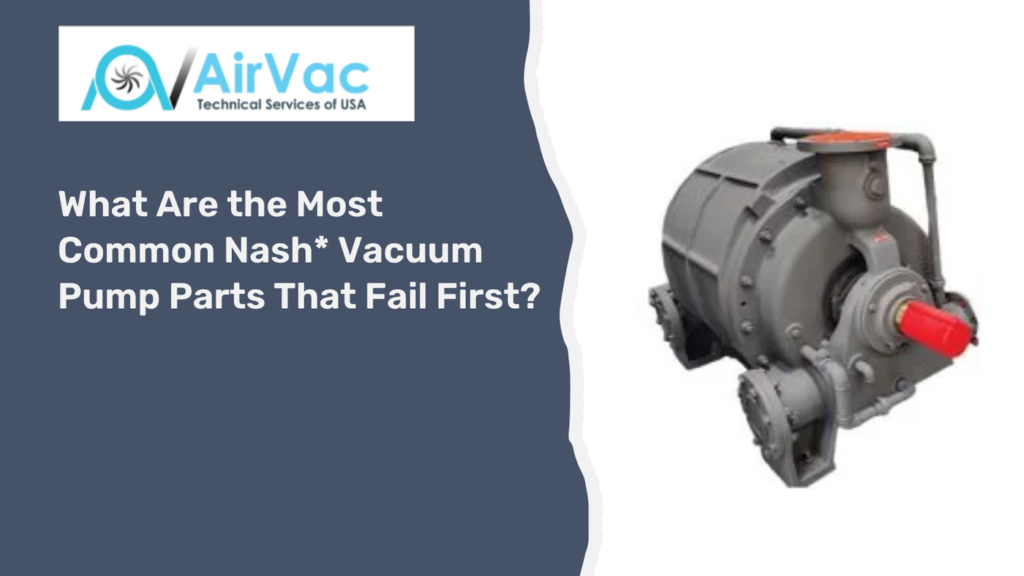
The parts that usually fail first in a Nash vacuum pump are mechanical seals, bearings, wear plates or port plates, impellers, gaskets and O-rings, and shaft sleeves. In real plant conditions, these parts wear faster because they handle friction, heat, contamination, vibration, seal liquid issues, and alignment stress every day. When one of them starts to fail, the first signs are often lower vacuum, leakage, rising vibration, higher power use, or unstable performance.
For maintenance teams, this matters because most pump failures do not begin with a dramatic breakdown. They begin with small wear patterns in parts that are already under the most stress. Bearings fail when lubrication is wrong or contaminated. Mechanical seals fail from dry running, misalignment, or contamination. Internal wear parts fail when clearances open up and hydraulic performance drops. Once that starts, the pump may still run, but it will not run efficiently or reliably.
The practical takeaway is simple. If you want to prevent unplanned downtime, start by watching the parts that fail first, not the parts that fail last. In most Nash liquid ring vacuum pumps, that means stocking critical spares, trending vibration and temperature, monitoring seal liquid condition, and rebuilding the pump before wear spreads into larger and more expensive components. Airvac’s own service content points to the same pattern across legacy Nash equipment in paper, chemical, food, power, and medical applications.
Why do some Nash* vacuum pump parts fail before others?
A Nash liquid ring vacuum pump is mechanically simpler than many other vacuum technologies, but a small group of Nash vacuum pump parts absorbs most of the operating stress. The pump depends on stable seal liquid, close internal clearances, correct lubrication, and steady alignment. When any of those conditions change, the same high-stress Nash vacuum pump parts usually start wearing first.
Nash vacuum pump parts often fail early for these reasons:
- Poor lubrication
- Dirty or overheated seal liquid
- Misalignment
- Cavitation or unstable operating conditions
- Corrosion or erosion
- Operating too far from design conditions
- Delayed maintenance or poor installation practices
This is why two pumps of the same model can have very different service lives. The model matters, but the condition and maintenance of Nash vacuum pump parts matter just as much.
What are the most common Nash* vacuum pump parts that fail first?
Below is the short answer most maintenance teams want.
| Rank | Part | Why it fails early | Typical warning signs |
| 1 | Mechanical seals or packing | Heat, dry running, contamination, misalignment | Leakage, seal water loss, hot seal area |
| 2 | Bearings | Poor lubrication, contamination, overload, misalignment | Noise, vibration, temperature rise |
| 3 | Wear plates or port plates | Internal rubbing, erosion, corrosion, opened clearances | Low vacuum, lower capacity, efficiency loss |
| 4 | Impeller | Erosion, corrosion, solids damage, cavitation | Vibration, reduced performance, imbalance |
| 5 | Gaskets and O-rings | Age, heat, chemical attack, improper assembly | External leaks, air leaks, vacuum loss |
| 6 | Shaft sleeves | Seal contact wear, corrosion, scoring | Repeated seal failure, shaft damage risk |
What usually fails first in a Nash* vacuum pump?
Mechanical seals and packing
In many plants, mechanical seals fail first because they sit at the boundary between the rotating shaft and the stationary housing. They depend on clean liquid, correct alignment, good installation, and a thin lubricating film between the faces. If that film breaks down, heat builds quickly and the seal starts leaking. John Crane lists poor lubrication, contamination, incorrect seal selection, misalignment, and improper installation among the leading causes of mechanical seal failure.
In a Nash pump, seal failure is often triggered by:
- Dirty or overheated seal water
- Dry running during startup or upset conditions
- Shaft runout or misalignment
- Worn shaft sleeves
- Improper rebuild practices
- Chemical attack from the process stream
What it looks like in the field:
A plant notices a damp area near the stuffing box or seal housing. Operators tighten around the problem, but the leak keeps returning. Soon the pump shows unstable vacuum and more frequent shutdowns. At that point, the seal is no longer a minor leak. It is an early warning that the support conditions around it are wrong.
Bearings
Bearings are another first-fail component because they carry shaft loads continuously. Nash’s own maintenance resources say the most common reasons for bearing problems are lack of lubrication or contaminated lubrication. Other common causes include incorrect seal liquid rates, excessive grease, insufficient grease, and grease mixing.
Across the wider pump industry, lubrication remains the biggest bearing risk. Reliable Plant reports that up to 80 percent of bearing failures are linked to improper lubrication.
Bearing trouble usually starts with:
- Wrong lubricant type
- Too much or too little grease
- Contamination from water or solids
- Misalignment
- Excess vibration
- Operation away from the intended duty point
What it looks like in the field:
The pump sounds rougher than usual. Bearing housings run hotter. Vibration trends rise slowly, then sharply. By the time the bearing actually fails, the repair may also involve the shaft, coupling, housing, or impeller balance.
Wear plates and port plates
Wear plates or port plates do not always get the same attention as seals and bearings, but they are central to liquid ring pump performance. When these surfaces erode, corrode, or wear, internal clearances open up. That reduces vacuum capability and gas-handling efficiency. Airvac’s repair content specifically links low vacuum and reduced performance to worn internal components and excessive clearances.
These parts wear faster when:
- Seal liquid carries abrasive solids
- Corrosion attacks internal surfaces
- Cavitation occurs
- The pump runs for long periods with poor water quality
- Internal rubbing develops after misalignment or bearing wear
What it looks like in the field:
The pump still turns, but it cannot pull the same vacuum as before. Operators increase water flow or adjust controls to compensate. Energy use rises. Production performance slips. The real issue is no longer outside the pump. It is inside the hydraulic path.
Impellers
Nash impellers are rugged, but they still fail from corrosion, erosion, cavitation, and foreign material damage. Because the impeller shapes the gas pockets and works directly with the liquid ring, even moderate wear can affect pump efficiency. Airvac’s troubleshooting material lists impeller wear as a common cause of low vacuum in Nash liquid ring pumps.
Impeller damage is more likely when:
- Seal liquid quality is poor
- Solids enter the pump
- The pump cavitates
- Corrosion attacks vane edges
- The rotor becomes imbalanced after wear or deposits build up
What it looks like in the field:
The pump vibrates more, capacity falls, and inspection shows pitting, thinning, or vane damage. Left alone, impeller damage can spread into larger rebuild costs.
Gaskets, O-rings, and soft sealing parts
These parts are inexpensive compared with larger hardware, but they fail often and create real problems. Age, compression set, bad chemistry, heat cycling, and improper assembly all shorten service life. When soft sealing parts degrade, they allow external leakage or air ingress, which can destroy vacuum performance even though the rotating assembly is still healthy.
These failures are common after:
- Reassembly with reused elastomers
- Chemical incompatibility
- Long storage or aging
- Heat exposure
- Uneven bolt loading during maintenance
Shaft sleeves
Shaft sleeves protect the shaft where the seal contacts it. They often wear before the shaft itself, which is exactly what they are supposed to do. Airvac’s spare-parts guide lists shaft sleeves among the most critical Nash spares because damage there often leads to repeat seal failure.
If the sleeve becomes scored, corroded, or worn out, a new seal may fail again quickly. This is why good rebuild shops inspect the sleeve and the sealing area together, not as separate problems.
How do these failures usually begin?
The first-fail parts often share the same root causes. Understanding those causes helps you stop repeat failures.
Why do bearings fail in Nash* vacuum pumps?
Nash points first to lubrication and contamination. In practice, bearing failure often comes from a chain reaction:
- Lubrication quality falls
- Heat rises
- Grease breaks down
- Vibration increases
- Misalignment or internal damage accelerates wear
A bearing that fails early is often warning you about another system problem, not just a bad bearing.
Why do mechanical seals leak or wear out?
Mechanical seals fail from dry running, contamination, incorrect materials, installation errors, and misalignment. Even short periods of poor lubrication can damage the seal faces. Once the faces distort or wear unevenly, leakage usually gets worse fast.
In Nash service, frequent seal failures can also point to worn shaft sleeves, poor seal liquid condition, or shaft movement caused by bearing wear. That is why replacing the seal alone does not always fix the pump.
Why do internal wear parts fail?
Internal wear parts fail because liquid ring pumps depend on close tolerances. When corrosion, erosion, cavitation, or rubbing open those clearances, the pump loses hydraulic efficiency. The result is usually low vacuum, reduced capacity, and higher power draw. Airvac’s rebuild and repair pages frame opened clearances and internal wear as classic reasons a pump needs more than routine maintenance.
Which parts should plants keep in stock?
For most facilities running Nash CL, SC, 904, or XL pumps, the best first-line spare-parts list includes:
- Mechanical seals or packing sets
- Bearings
- Gasket kits and O-rings
- Shaft sleeves
- Wear plates or port plates if model-specific lead times are long
- A full rebuilt spare pump for critical service
Here is a practical planning table.
| Plant condition | Recommended spare strategy |
| One pump in noncritical service | Stock seals, bearings, gasket kit |
| One pump in critical service | Stock seals, bearings, sleeves, wear parts, consider spare unit |
| Multiple identical pumps | Standardize seals, bearings, gasket kits, sleeves across fleet |
| High-value continuous process | Keep a rebuilt spare pump or swap-out option ready |
This is one reason Airvac recommends a stronger spare inventory for plants where downtime costs more than parts carrying costs.
How can you tell which part is failing first?
Watch the symptom pattern.
| Symptom | Most likely first-check part |
| External leakage near seal area | Mechanical seal, packing, sleeve |
| Rising vibration | Bearings, impeller, coupling alignment |
| Reduced vacuum | Wear plates, impeller, seal leakage, internal clearances |
| Hot bearing housing | Bearings, lubrication issue |
| Repeated seal failure | Shaft sleeve, alignment, seal liquid condition |
| Sudden drop in efficiency | Internal wear parts, impeller damage, air leak |
This kind of symptom-based screening does not replace teardown inspection, but it helps maintenance teams prioritize the right checks first.
When should you repair a part and when should you rebuild the pump?
If the issue is isolated, such as one leaking seal or one damaged bearing with no evidence of wider wear, a focused repair may be enough. But if the pump shows low vacuum, repeated seal failure, opened clearances, corrosion, and rising vibration together, a rebuild is usually the better long-term choice. Airvac’s rebuild guide explains that by the time bearings fail, seal faces erode, and internal clearances open up, the pump often needs a structured rebuild to restore original performance.
Use this rule of thumb:
- Repair when one failure is isolated and root cause is clear
- Rebuild when failures repeat or multiple systems show wear
- Replace or swap out when downtime risk is high or the casing and internals are too far gone
What maintenance practices help these parts last longer?
The simplest prevention steps are still the most effective:
- Keep lubrication correct and clean
- Monitor bearing temperature and vibration
- Maintain clean, stable seal liquid
- Inspect sleeves when replacing seals
- Track vacuum performance over time
- Fix leaks and alignment issues early
- Do not ignore seasonal changes in water temperature or process load
- Use qualified rebuild procedures and correct replacement parts
A practical example is a paper mill pump that sees repeated seal failures every few months. Replacing the seal alone looks cheaper, but the real cause may be sleeve wear, hot seal liquid, and slight shaft movement from bearing damage. Once all three causes are corrected together, seal life often improves sharply.
What should U.S. plants keep in mind about compliance and service work?
The exact repair process for a vacuum pump is a maintenance decision, but workplace safety requirements still apply. OSHA’s lockout/tagout standard covers servicing and maintenance where unexpected startup or stored energy could injure workers. OSHA also notes that many states operate OSHA-approved State Plans, so enforcement details and related requirements can vary by state and by workplace. Before opening, testing, or reinstalling a pump, confirm site procedures with your EHS team and use qualified service personnel where required.
FAQs
What is the most common Nash* vacuum pump part to fail first?
In many plants, the first part to fail is the mechanical seal or packing, followed closely by bearings. These parts see constant friction, heat, and contamination risk, so they often show damage before larger internal components.
Why do Nash* pump bearings fail so often?
Bearings usually fail because of lubrication problems, contamination, misalignment, or overheating. Nash specifically highlights lack of lubrication and contaminated lubrication as leading causes.
Can worn shaft sleeves cause repeat seal failure?
Yes. A scored or corroded shaft sleeve can damage the sealing surface and cause a new seal to fail again quickly. That is why sleeves should be checked every time a seal failure repeats.
What part failure causes low vacuum first?
Low vacuum often starts with worn wear plates, port plates, impeller wear, internal clearance growth, or seal leakage. It can also come from overheated or insufficient seal liquid.
Should plants stock individual parts or a spare pump?
That depends on how costly downtime is. For lower-risk service, seals, bearings, sleeves, and gasket kits may be enough. For critical operations, a rebuilt spare pump or swap-out program often provides the fastest recovery.
How do you know a Nash* pump needs a rebuild instead of another repair?
If the pump has repeated seal or bearing failures, low vacuum, rising vibration, opened internal clearances, or signs of corrosion and wear across multiple components, a rebuild is usually more effective than another short-term repair.
Conclusion
The most common Nash vacuum pump parts that fail first are the parts under the most daily stress: seals, bearings, internal wear parts, impellers, gaskets, and shaft sleeves. If you monitor those parts closely, you can catch problems while they are still small, protect uptime, and avoid larger rebuild costs later. For U.S. plants that rely on legacy Nash equipment, the smartest strategy is usually a mix of condition monitoring, critical spare stocking, and timely rebuild planning. That is where a specialized partner like Airvac Technical Services can add real value by helping maintenance teams identify the true failure point before it turns into a full production loss.