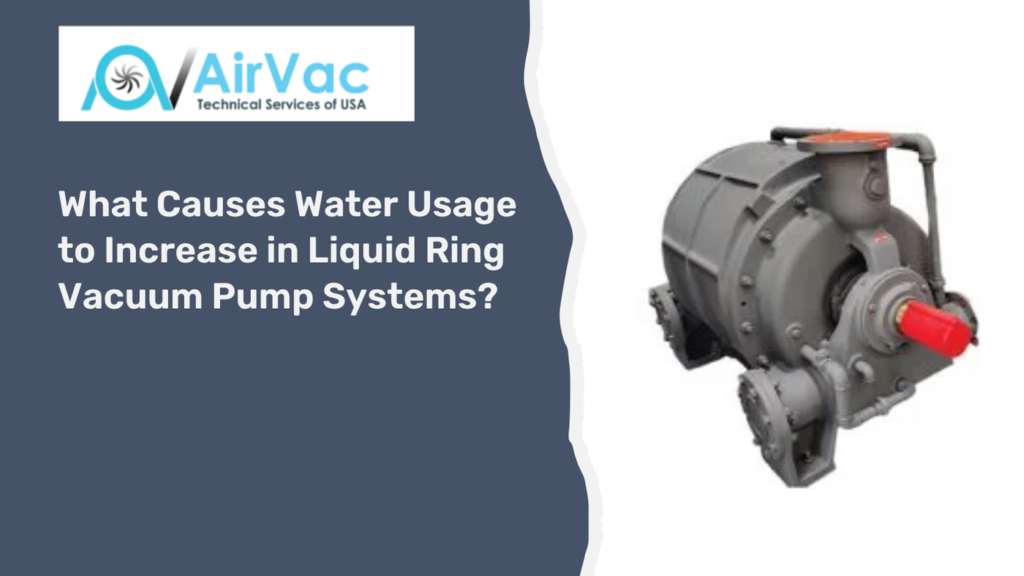
Liquid ring vacuum pump systems use more water when the seal liquid gets too hot, the pump runs in a once through setup, recirculation controls are weak, internal clearances wear out, process conditions change, or the system suffers from leaks and poor instrumentation. In simple terms, rising water use usually points to a temperature problem, a control problem, a mechanical wear problem, or a system design problem. If operators keep adding fresh water just to hold vacuum, the pump is telling you something is off.
This matters because water use is not just a utility cost. Higher seal water demand can raise wastewater handling costs, reduce vacuum performance, increase energy consumption, and shorten equipment life. In many U.S. plants, it can also create compliance and discharge concerns, especially when process contamination enters the seal liquid stream. Federal discharge rules apply under the Clean Water Act framework, but the permit and pretreatment details can vary by state, by municipality, and by facility discharge route. That is why plants should confirm site-specific requirements with their environmental team, local pretreatment authority, or state regulator.
For most facilities, the root causes are predictable. Hotter seal water raises vapor pressure and reduces achievable vacuum, so operators often compensate by adding more fresh water. Once through systems naturally consume more water than partial recovery or closed loop systems. Worn internals, suction leaks, incorrect flow rates, and fouled heat exchangers also push water demand up because the pump loses efficiency and needs more support liquid to keep performing.
The good news is that high water use is usually fixable. Plants that monitor seal liquid temperature, stabilize recirculation, repair wear, and upgrade controls can often cut water waste sharply while improving vacuum stability. Airvac’s audience is exactly the kind of plant team that cares about this balance: uptime, lifecycle cost, and practical fixes that work in real industrial service.
What is a liquid ring vacuum pump and why does it use water?
A liquid ring vacuum pump uses a rotating liquid, most often water, to form a ring inside the casing. That liquid creates the seal needed to trap, compress, and discharge gas. The liquid also absorbs heat from compression and helps the pump handle wet, dirty, or condensable gas streams better than many dry technologies.
Because the water acts as both the sealing medium and the heat sink, water use is part of normal operation. The question is not whether the pump uses water. The real question is whether it is using more water than it should for the duty, the vacuum level, and the system design.
Why does water usage increase over time?
Water usage usually rises for one of seven reasons:
- Seal water temperature climbs
- The recirculation loop cannot reject heat fast enough
- The system runs once through instead of recirculating
- Internal pump wear reduces efficiency
- Process gas conditions change
- Operators overfeed seal liquid to protect vacuum
- Leaks, fouling, or poor controls hide the real problem
In older plants, several of these problems often happen at the same time. A worn pump with a dirty heat exchanger and no reliable temperature control will almost always consume more water than expected.
What are the most common root causes of high water usage?
1. Seal water temperature is too high
This is one of the biggest causes. As seal water gets hotter, its vapor pressure rises. That makes it harder for the pump to maintain the same vacuum level. Operators then add cooler fresh water to bring the temperature down and recover performance. That extra makeup water drives total consumption higher.
A common plant scenario looks like this:
- Summer ambient temperatures rise
- Cooling water enters warmer than normal
- The recirculation tank runs hot
- Vacuum becomes unstable
- Operators crack open the makeup water valve further
- Water use jumps for the rest of the season
If your system uses much more water in hot weather, seal liquid temperature should be your first check.
2. The pump is operating in a once through system
A once through liquid ring system continuously takes in fresh water and discharges used water. That can be simple, but it is the least water efficient arrangement. Partial recirculation and full recovery systems can dramatically reduce consumption by reusing water and removing heat with a heat exchanger or cooler.
Water management options compared
| System type | How it works | Water use | Best fit |
| Once through | Fresh water enters continuously and exits after use | High | Simple systems with cheap water and easy discharge |
| Partial recirculation | Some water is reused, some is replaced | Medium | Plants balancing cost and simplicity |
| Closed loop / total recovery | Water is recirculated and cooled | Low | Plants focused on water savings and control |
If water cost, wastewater treatment, or sustainability goals matter at your facility, system configuration deserves close review. Sources on closed loop designs report major water savings versus once through operation, though exact results depend on duty, cooling capacity, and contamination level.
3. The recirculation loop cannot remove heat effectively
Even when a system is set up to reuse water, poor heat rejection can push operators back toward heavy makeup water use. The usual causes include:
- Fouled heat exchangers
- Undersized coolers
- Low cooling water flow
- High ambient temperature
- Poor tank design or short-circuiting in the separator
- Failed temperature controls or stuck valves
When the loop gets heat soaked, water temperature keeps climbing. The system then needs more fresh cool water to stay in range. This is one reason a closed loop system may still waste water if it is not maintained.
4. Internal wear increases slip and reduces efficiency
Worn impellers, port plates, cones, casing surfaces, and clearances can all reduce pump efficiency. The pump then struggles to achieve the required vacuum or capacity, and operators may try to compensate with more seal liquid flow. That does not solve the wear, but it often increases water consumption.
This is especially relevant for legacy Nash pumps that have seen years of service in paper, chemical, power, or food plants. Airvac’s own service content highlights worn clearances, hydraulic loss, and rebuild needs as common drivers of performance decline in liquid ring units.
5. The process gas load has changed
A pump sized for one duty may start using more water if the process changes. Common examples include:
- Higher inlet gas temperature
- More condensable vapor
- More carryover from the process
- Greater air leakage into the system
- Higher required vacuum than the original design point
More condensable vapor means the liquid absorbs more heat and may become contaminated faster. Both issues can increase water demand.
6. Seal liquid flow is set too high
Some operators intentionally overfeed water because it seems safer. In the short term, extra flow may help cool the pump. In the long term, it wastes water, can upset system balance, and may hide the actual issue. Improper seal liquid flow is a known cause of performance problems and inefficient operation.
The better approach is to run within the manufacturer’s recommended range and correct the cause of rising temperature or poor vacuum.
7. Leaks and instrumentation gaps cause overcorrection
Bad gauges, missing temperature transmitters, uncalibrated flow meters, and suction leaks create guesswork. When operators cannot trust the readings, they often add more water than needed. A plant can waste a surprising amount of water simply because nobody has a clear picture of seal liquid temperature, separator level, flow rate, or actual vacuum performance.
How does hotter water reduce vacuum performance?
As water temperature rises, the liquid’s vapor pressure also rises. That means the pump reaches a limit sooner when trying to pull deeper vacuum. In practical terms, hotter seal water reduces the pump’s ability to achieve low absolute pressure. Operators may notice unstable vacuum, lower capacity, or the need for constant adjustment.
Practical effect of seal water temperature
| Condition | Typical impact on operation |
| Cool seal water | Better vacuum capability and more stable performance |
| Warm seal water | Reduced vacuum, more makeup water demand |
| Hot seal water | Sharp performance drop, possible cavitation risk, high water use |
That is why temperature control is central to water control in liquid ring systems.
Which warning signs suggest your system is wasting water?
Look for these signs:
- Makeup water valve is open more than usual
- Separator or recirculation tank runs hot
- Vacuum performance drops in summer
- Water discharge volume trends upward
- Operators adjust flow manually every shift
- Heat exchanger differential temperature is poor
- Pump needs more water to hold the same vacuum
- Utility and wastewater costs rise without a production increase
If you see three or more of these together, the issue is probably systemic rather than incidental.
How can plants diagnose the real cause?
Start with a short field audit. Check the simple things first.
Step by step troubleshooting checklist
- Measure seal liquid inlet and outlet temperature
- Confirm actual seal liquid flow rate
- Review system type: once through, partial recirculation, or closed loop
- Inspect heat exchanger cleanliness and cooling capacity
- Check separator level controls and makeup water valves
- Verify vacuum level against design duty
- Inspect for suction leaks and process air inleakage
- Review pump clearances, wear surfaces, and vibration history
- Test water quality for scaling, solids, or process contamination
- Trend all readings over time, not just one shift
A useful rule is this: if temperature is high, fix cooling first. If temperature is normal but water use is still high, look at flow control, leaks, wear, and process changes.
What maintenance practices help reduce water consumption?
Good maintenance lowers water use because it keeps the pump efficient and the recirculation loop stable.
Best practices
- Clean heat exchangers on schedule
- Inspect and calibrate temperature and flow instruments
- Maintain separator internals, valves, and level controls
- Monitor bearing condition and vibration
- Check internal clearances during outages
- Remove scale, solids, and process contamination from the water circuit
- Repair suction leaks quickly
- Review seasonal operating changes before summer demand rises
If a legacy unit has chronic wear or repeated low-vacuum complaints, a rebuild may restore hydraulic efficiency more effectively than constant operating adjustments. Airvac already has useful supporting material on Nash liquid ring vacuum pump repair, the rebuild process, and how to rebuild or replace your Nash vacuum pump.
When should you consider a system upgrade?
Consider an upgrade when:
- Water cost is rising faster than maintenance savings
- The system relies on heavy once through usage
- Cooling limits prevent stable recirculation
- Pump wear returns quickly after minor repairs
- Discharge handling has become expensive or difficult
- The plant has sustainability or wastewater reduction goals
Upgrade options may include:
- Partial recirculation conversion
- Closed loop water recovery
- Better heat exchanger capacity
- Automated temperature control
- Improved separators and instrumentation
- Rebuilt or replacement pumps matched to actual duty
Plants running older Nash CL, SC, 904, or XL platforms often evaluate these changes during rebuilds or swap-out planning because it reduces downtime and makes project timing easier. For model-specific context, Airvac’s Nash CL series,SC series, and rebuild and swap-out service pages are good internal follow-ups.
What does high water use cost a plant beyond the water bill?
High water use often creates a chain of hidden costs:
- More wastewater treatment or disposal
- More energy for pumping, cooling, and treatment
- Lower vacuum stability
- More operator intervention
- Faster corrosion, scaling, or contamination issues
- Greater production risk if the pump drifts off performance
In some facilities, the largest cost is not the incoming water. It is the downstream effect of unstable vacuum on production quality, drying, filtration, packaging, or condenser performance.
FAQ
What is the most common cause of high water usage in a liquid ring vacuum pump?
The most common cause is high seal water temperature. As temperature rises, vacuum capability falls, so operators often add more fresh water to cool the system and recover performance.
Can a liquid ring vacuum pump run with less water?
Yes, if the system is designed and controlled correctly. Partial recirculation and closed loop systems can reduce fresh water use significantly compared with once through operation, provided cooling and contamination control are adequate.
Does hotter weather increase water use in liquid ring systems?
Often, yes. Higher ambient and cooling water temperatures reduce heat rejection and raise seal liquid temperature, which can increase makeup water demand and reduce vacuum performance.
How do I know if the problem is the pump or the system?
If temperature control, flow control, leaks, and heat exchanger performance are poor, the system is likely a major part of the issue. If those are stable and performance is still low, inspect internal wear, clearances, and hydraulic condition in the pump.
Can worn internal parts increase water usage?
Yes. Worn internals reduce efficiency and vacuum capability. Operators may compensate by increasing seal water flow or fresh water makeup, which raises total consumption without solving the root cause.
Are there regulatory issues with discharging seal water?
Potentially, yes. In the United States, industrial wastewater discharges are regulated under the Clean Water Act and pretreatment framework. Permit obligations and local limits can vary by state, municipality, and discharge path, so facilities should verify requirements with the appropriate authority.
Conclusion
Water usage increases in liquid ring vacuum pump systems for understandable reasons: hotter seal liquid, weak heat rejection, once through operation, mechanical wear, process changes, leaks, and poor control. The fix is usually not more water. The fix is better temperature management, better diagnostics, and better equipment condition. Plants that monitor temperature, flow, vacuum, and wear together can reduce waste and improve reliability at the same time. For facilities running legacy Nash equipment, this is often the point where a careful review of rebuild condition, recirculation design, and operating practice pays off. That is the kind of practical lifecycle support Airvac Technical Services is built to provide.